The three pipe materials failing in Jacksonville homes
Three materials drive nearly every Jacksonville repipe: cast-iron drain lines in pre-1990 homes that rot from the inside out, galvanized steel supply lines that corrode shut, and polybutylene — the gray plastic pipe installed heavily from 1978 to 1995 that fails without warning and that insurers now flag. If your home has any of them, a repipe is a when, not an if.
- Cast iron (drains, pre-1990). The pipe corrodes from the inside, so it looks solid until it doesn't. Symptoms build for years: slow drains everywhere, sewer smells, gurgling, recurring backups that a drain cleaning only fixes for a few months. It's the number-one hidden repipe driver in Jacksonville's older housing stock.
- Galvanized steel (supply, roughly pre-1970s). Rust builds up inside the pipe until pressure drops to a trickle and the water runs brown after a vacation. Corrosion also eats through at the threads — leaks start at the joints.
- Polybutylene (supply, 1978–1995). Gray plastic pipe installed across the Sunbelt during the building boom. It degrades from contact with chlorinated water and fails suddenly, which is why many insurers surcharge, exclude or refuse to write policies on homes that still have it. Replacing it is as much an insurance decision as a plumbing one.
The Jacksonville neighborhoods where repipes cluster
Repipes concentrate in Jacksonville's pre-1990 neighborhoods: Riverside, Avondale, Springfield, Murray Hill, Ortega and San Marco carry the metro's oldest housing stock, which means original cast iron and galvanized pipe — and, in homes from the late '70s through mid-'90s anywhere in the metro, polybutylene.
The historic urban core is the epicenter. A 1925 Riverside bungalow or a Springfield four-square has likely outlived its original drain lines twice over, and many still run the first set. Murray Hill and Ortega's mid-century homes sit in the galvanized era. Meanwhile polybutylene isn't a historic-district problem at all — it shows up in 1980s subdivisions from Arlington and Mandarin out to Orange Park and Middleburg. If you're buying in any of these areas, the pipe material belongs on your inspection checklist right next to the roof.
Repeat leaks in an old house? Stop patching.
Talk to a licensed Jacksonville plumber about a repipe quote — real numbers for your house, upfront, no obligation.
What a whole-home repipe costs in Jacksonville
A whole-home repipe in Jacksonville runs $4,500–$15,000: PEX in a single-story two-bath home sits at the low end around $4,500–$8,000, larger or two-story homes run $7,500–$12,000, and copper pushes any project toward $9,000–$15,000. Most jobs take 2–5 days.
| Repipe project | Typical Jacksonville range |
|---|---|
| PEX repipe — single-story, 1–2 bath | $4,500–$8,000 |
| PEX repipe — larger or two-story, 3+ bath | $7,500–$12,000 |
| Copper repipe — whole home | $9,000–$15,000 |
| Polybutylene replacement (supply lines) | $4,500–$10,000 |
| Cast-iron drain line replacement | quoted separately — often pairs with sewer work |
What moves the number: square footage and fixture count, one story vs two, slab-on-grade vs crawl space, pipe material, and how much drywall has to be opened and patched. Get the drywall repair scope in writing — some quotes include patch-and-texture, some leave it to you. Every job through 904 Plumbers is quoted upfront, per project, before a wall is opened.
Copper vs PEX: which should you choose?
PEX is the right answer for most Jacksonville repipes: it costs 30–50% less than copper, it doesn't corrode or pinhole in aggressive water, and it installs faster with fewer joints. Copper still earns its premium where pipe is exposed, and some owners of historic homes simply prefer it.
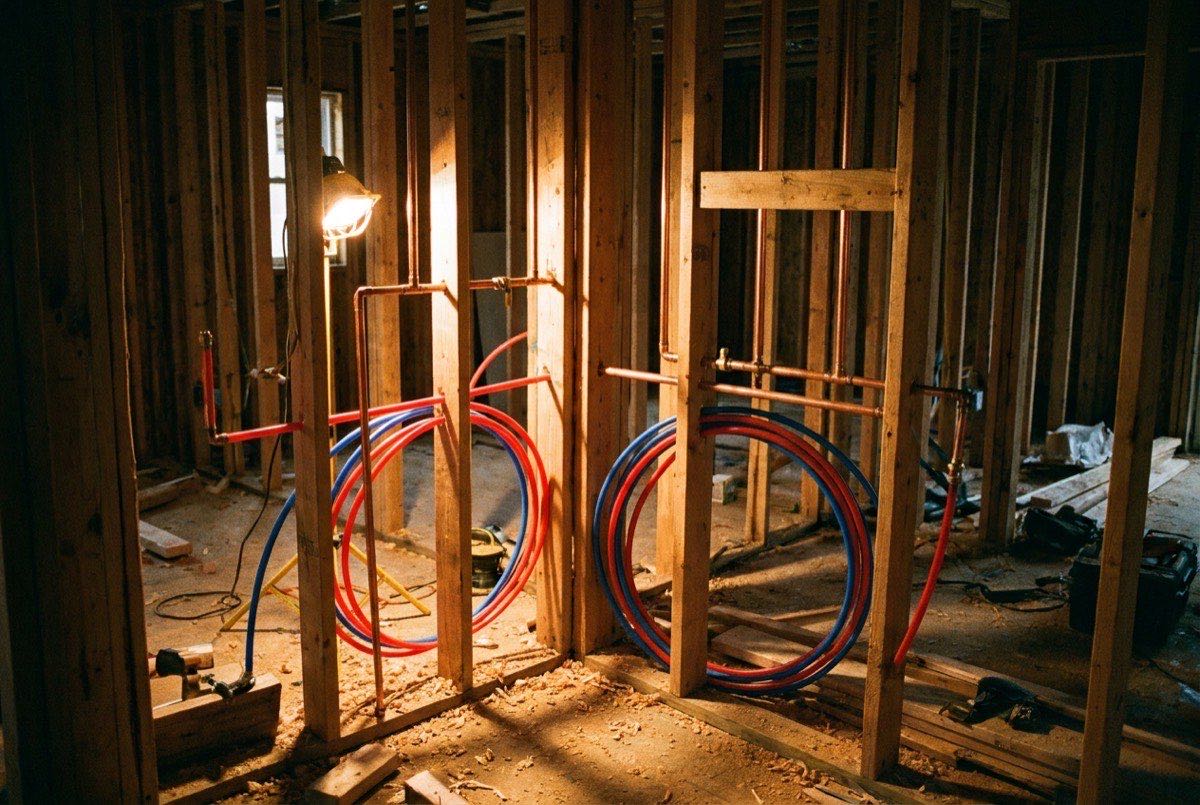
Copper is proven over decades and adds a traditional-quality signal at resale — but it's the material that pinholes in slab homes in the first place, and its price tracks the commodity market. PEX is flexible plastic tubing that pulls through walls and attics like electrical cable, needs fewer fittings (fewer future leak points), and tolerates Jacksonville's hard, mineral-heavy groundwater without corroding. The honest guidance most licensed plumbers give here: PEX for the hidden runs, copper only where you want it visible or your HOA or taste demands it.
What a repipe week actually looks like
A typical 2–5 day repipe goes: day one is mapping and staging, days two and three are running the new lines and cutting drywall access, then tie-over to the new system, pressure testing and city inspection, and finally drywall patching. You live at home the whole time — water is off only a few hours at a stretch.
- Day 1 — walkthrough and staging. The crew maps every fixture run, protects floors and furniture, and cuts the access openings.
- Days 2–3 — new lines go in. PEX or copper runs through the attic and walls to every fixture while the old system stays live. Evenings, your water works.
- Day 3–4 — tie-over and testing. The house switches to the new system (the longest single water shutoff, usually a few hours), the old lines are capped and abandoned, and everything is pressure-tested.
- Day 4–5 — inspection and patching. The City of Jacksonville inspects the permitted work, then drywall openings are patched. Paint is typically on the homeowner.
Permits and historic districts
A repipe requires a plumbing permit, which the licensed plumber pulls — that permit and inspection are your protection, not red tape. One Jacksonville wrinkle: homes inside the Springfield and Riverside/Avondale historic-district overlays can carry extra review steps, especially where exterior work is involved. A plumber who works these neighborhoods regularly will build that into the schedule instead of discovering it mid-job.
How 904 Plumbers handles a repipe
- You call, we answer. Tell us the home's age, neighborhood and symptoms — brown water, repeat leaks, an insurer letter about polybutylene. We'll tell you what a repipe evaluation involves.
- We match you with a licensed plumber. Your project routes to a licensed, insured Florida plumber who repipes homes like yours — including the historic-district permit wrinkles if you're in Springfield or Riverside.
- Upfront quote, then work. The plumber inspects, prices the full scope in writing — material, days, drywall repair — and you approve it before a wall is opened.
904 Plumbers is a local referral and dispatch service — the work itself is performed by independent, licensed and insured Florida plumbing contractors, and your assigned plumber's license number appears on your quote and invoice.