Repair or replace: the 8–12 year rule
Florida water heaters last 8–12 years — shorter than the national norm — because our hard, mineral-heavy groundwater scales up tanks and elements faster. If your heater is past 8 years old and leaking from the tank itself, needing a second repair, or rusting at the fittings, replacement beats repair.
The math is simple: a $400 repair on a 10-year-old tank buys you months on a unit that's already at end of life, while $1,100–$2,600 buys a new tank with a fresh manufacturer warranty. One caveat in the other direction — a failed heating element, thermostat, or T&P valve on a 5-year-old heater is a cheap fix, not a replacement. When you call, say the heater's age and what it's doing, and you'll get a straight answer on which side of the line you're on.
- Replace: water pooling under the tank, rust in the hot water, rumbling or popping from heavy sediment, a unit 8+ years old needing its second repair.
- Repair: a tripped high-limit switch, one bad element or thermostat, a weeping T&P valve on a younger tank, pilot or ignition issues on a newer gas unit.
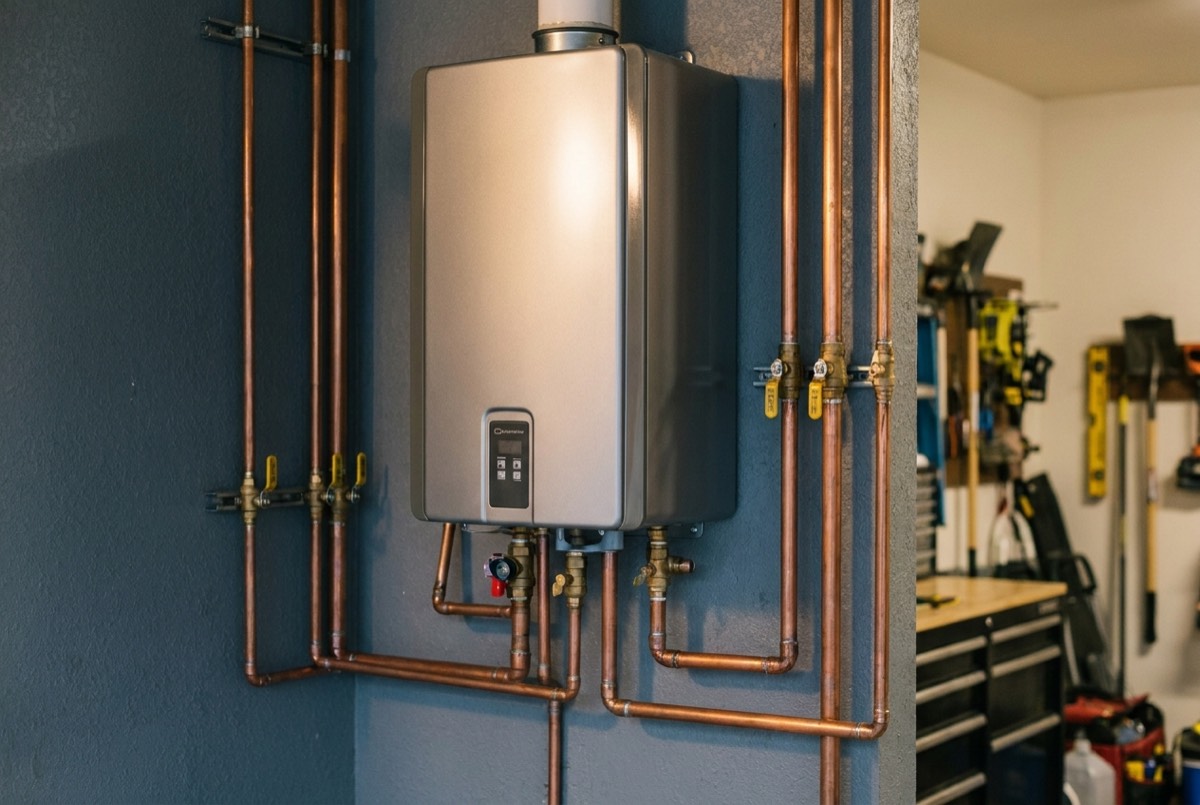
Tank vs tankless in a Jacksonville home
A tank replacement costs $1,100–$2,600 installed and lasts 8–12 years in Florida; a tankless unit costs $2,500–$5,500 installed and lasts 10–20 years with endless hot water and a smaller footprint. Tankless wins on lifespan and efficiency, tank wins on upfront cost and simplicity.
The honest local wrinkle: Jacksonville's hard, sulfur-tinged water scales tankless heat exchangers just like it scales tanks — a tankless unit here needs an annual descaling flush to hit that 10–20 year lifespan, and many installers add flush valves for exactly that reason. If your home already fights hard-water buildup on fixtures, pairing any new heater with a water softener protects the investment on either side of the tank-vs-tankless decision — our tankless vs tank water heater guide runs the full Jacksonville math.
Switching from tank to tankless also costs more than the unit itself suggests: gas models often need a larger gas line and new venting, and electric whole-home tankless can require a panel upgrade. That's why the tankless range is wide — a straight swap of an existing tankless is the low end; a first-time conversion is the high end.
No hot water this morning?
Most Jacksonville replacements are done the same day — upfront quote from a licensed local plumber before any work starts.
What water heater replacement costs in Jacksonville
Plan on $1,100–$2,600 installed for a standard tank water heater in Jacksonville — electric models at the lower half of the range, gas at the upper. Tankless installations run $2,500–$5,500 depending on fuel type and whether gas lines or venting need upgrading.
| Replacement job | Typical Jacksonville range (installed) |
|---|---|
| 40-gallon electric tank | $1,100–$1,700 |
| 50-gallon electric tank | $1,300–$2,100 |
| 40–50-gallon gas tank | $1,400–$2,600 |
| Tankless, straight swap of existing tankless | $2,500–$3,500 |
| Tankless, first-time conversion from tank | $3,500–$5,500 |
Installed means installed: the unit, removal and haul-away of the old heater, new supply connections and pan, the Duval County permit, and the labor — quoted as one upfront number before work starts. If the plumber finds a code item that must be corrected during replacement, such as a missing expansion tank or an unsafe T&P discharge line, that's explained and quoted before it's added, not discovered on the invoice.
Why Jacksonville water kills heaters early
Jacksonville's groundwater is hard and sulfur-tinged, so minerals drop out of solution every time the water heats — building a sediment layer that insulates the burner or elements, makes tanks rumble, and eats efficiency. An annual flush is the single cheapest way to stretch a heater toward the 12-year end of its lifespan.
That sediment layer is why Florida heaters average 8–12 years while units in soft-water regions last longer. It also explains two symptoms homeowners mistake for a dying heater: popping or rumbling sounds (steam bubbles escaping through sediment) and hot water that runs out faster than it used to (sediment displacing tank capacity). Both mean flush now — and if the smell of sulfur rides along in your hot water, the tank's anode rod is usually reacting with the water's sulfur content, a swappable part rather than a death sentence.
If you're replacing anyway, that's the moment to break the cycle: whole-home softening or filtration installed alongside the new heater protects it from day one instead of starting the same clock over.
Permits: yes, you need one in Duval County
Water heater replacement requires a plumbing permit in Duval County, and licensed plumbers pull it as part of the job — it's included in the installed price above. A permit isn't red tape; it's the inspection that catches unsafe venting, missing pans, and bad T&P discharge before they become a problem.
It also matters at sale time: unpermitted water heater work is the kind of thing a home inspector flags and a buyer's agent negotiates against. A licensed plumber handling the permit is one of the practical differences between a real installation and a handyman swap — and if your home sits in one of the historic overlay areas like Springfield or Riverside, the permit process can carry an extra step or two, which your plumber handles.
How replacement works with 904 Plumbers
- You call, we listen. Tell us the heater's age, fuel type, and what it's doing. We'll tell you whether it sounds like a repair or a replacement.
- We match you with a licensed plumber. Your job routes to a licensed, insured Florida plumber near you who installs your fuel type — gas or electric, tank or tankless.
- Upfront quote, then work. The plumber confirms sizing on-site, quotes the full installed price including permit and haul-away, then does the swap — most in a single visit.
904 Plumbers is a local referral and dispatch service — the work itself is performed by independent, licensed and insured Florida plumbing contractors, and your assigned plumber's license number appears on your quote and invoice.