Why Southside & Baymeadows homes get slab leaks
Southside and Baymeadows grew from the 1970s through the 1990s into one of Jacksonville's most mixed housing areas — 1970s–1980s ranches and townhomes, sprawling 1980s–1990s condo communities, and newer construction sharing the same ZIP codes. Nearly all of it is slab-on-grade, with supply lines run under the concrete.
That era spans both problem materials: polybutylene (1978–1995) in a lot of the supply lines and aging copper in the rest, all buried in slab. A pinhole or a failed poly fitting leaks into the foundation and surfaces as a warm floor, a musty baseboard, or a JEA bill that climbs two cycles running.
In Southside's townhome and condo communities, a slab leak can also involve shared walls and HOA coordination — one more reason to get the leak precisely located electronically before anyone opens concrete. A tight detection mark keeps the repair small and the neighbors happy.
The four warning signs of a slab leak
The classic Southside & Baymeadows slab-leak signs are a warm spot on the floor, a JEA water bill that jumps $30–$100 with no change in your habits, the sound of running water when every fixture is off, and damp carpet or baseboards with no visible source. Any two together means it's time to get the leak located.
- Warm floor spots. The most reliable sign — a leak on the hot line heats the slab above it.
- A jumping JEA bill. A pinhole wastes thousands of gallons a month; two rising cycles with no lifestyle change points at the slab.
- Running-water sound with everything off — a faint hiss under the floor.
- Damp baseboards or buckling floors far from the actual leak, as water tracks the slab edge.
Quick self-test: shut off every fixture, then watch the meter at the street. If it's still moving, water is leaving the system — and under a Southside & Baymeadows slab is the most common place.
Warm floor or a jumping bill in Southside & Baymeadows?
Talk to a licensed local plumber about electronic leak detection — upfront quote before anyone touches the slab.
What slab leak detection & repair costs in Southside & Baymeadows
Electronic slab leak detection runs $150–$450, and the repair runs $1,500–$5,000+: rerouting a line overhead usually lands at $1,500–$3,500, while opening the slab for a spot repair runs $1,500–$3,000 plus flooring restoration. The detection fee is often credited toward the repair when the same plumber does both.
| Slab leak job | Typical Southside & Baymeadows range |
|---|---|
| Electronic / acoustic leak detection | $150–$450 |
| Reroute one line overhead (attic or walls) | $1,500–$3,500 |
| Spot repair through the slab (jackhammer) | $1,500–$3,000 |
| Multiple-line reroute | $3,000–$5,000+ |
| Whole-home repipe (repeat slab leaks) | $4,500–$15,000 |
Every repair is quoted upfront, per job — the plumber pinpoints the leak, walks you through reroute vs spot repair, and you approve a number before any floor or attic is opened. For how this fits against every other plumbing job, see the Jacksonville price guide.
How the leak gets found without tearing up your floor
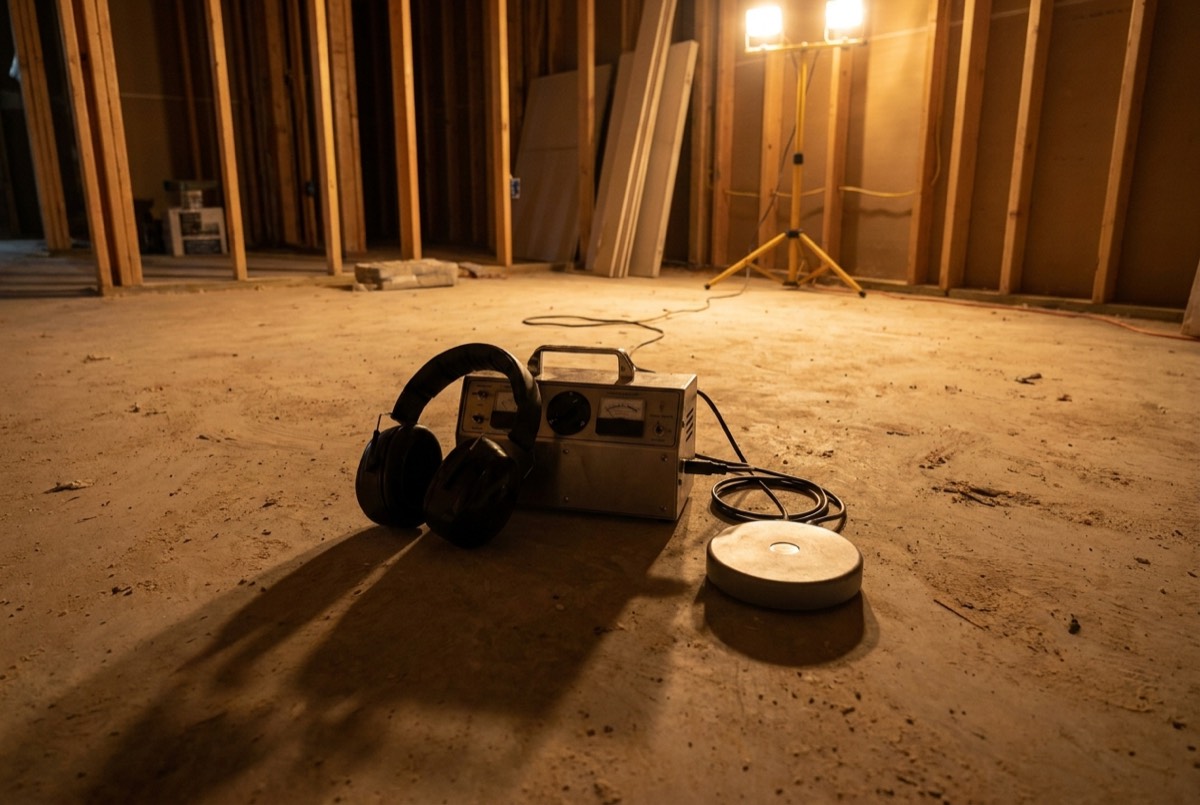
Modern detection is electronic, not exploratory: the plumber pressure-tests the lines to confirm which is leaking, then uses acoustic listening equipment — often with line tracing or thermal imaging — to pinpoint the leak through the concrete, usually to within a foot. Jackhammering on a guess is obsolete.
It takes one to three hours: isolate and pressure-test the supply lines, listen acoustically for the hiss of escaping water, trace the pipe run electronically, and on hot-line leaks read the warm plume with a thermal camera. The result is a precise mark on the floor — which is what keeps the repair in the ranges above instead of turning into demolition.
Reroute overhead vs repair through the slab
Two ways to fix it: abandon the leaking line and reroute a new one overhead through the attic, or open the slab at the marked spot and repair the pipe directly. In older Southside & Baymeadows homes an overhead reroute is usually the smarter money; a through-slab spot repair suits a single failure in otherwise healthy pipe.
- Overhead reroute ($1,500–$3,500/line). The bad run is capped and new PEX or copper takes the high road — no broken concrete, and the pipe stays accessible. Best when the rest of the line is the same aging material.
- Through-slab spot repair ($1,500–$3,000). Concrete opened at the mark, pipe repaired, slab patched — plus flooring restoration. Best for newer pipe or a genuine one-off.
Second or third slab leak? Stop patching — repeat leaks are how a failing system announces itself, and a whole-home repipe is often cheaper than three repairs plus three rounds of flooring.
Will insurance cover a Southside & Baymeadows slab leak?
Usually partially. Many Florida policies cover tearing out and restoring the slab and flooring to reach the leak, plus resulting water damage — but not the pipe repair itself, treated as wear and tear. Coverage varies, so read your policy and document everything before repairs begin.
Photograph the meter reading, the wet areas and the detection report; keep the plumber's written diagnosis; and call your carrier before demolition, not after. Older homes with galvanized or polybutylene pipe can also face exclusions — a licensed plumber's leak-detection report is exactly what an adjuster wants to see. (Not insurance advice — confirm with your carrier.)
How 904 Plumbers handles a Southside & Baymeadows slab leak
- You call, we answer. Describe the warm spot, the bill jump, the meter test. We'll tell you how urgent it is and what to shut off meanwhile.
- We match you with a licensed plumber near Southside & Baymeadows who carries electronic leak-detection gear and does slab work every week.
- Upfront quote, then work. The plumber pinpoints the leak, lays out reroute vs spot repair with real numbers, and you approve before any work begins.
904 Plumbers is a local referral and dispatch service — the work itself is performed by independent, licensed and insured Florida plumbing contractors, and your assigned plumber's license number appears on your quote and invoice.